10 Proven Strategies for TikTok Spark Ads
10 Proven Strategies for TikTok Spark Ads
Jennifer Geithner •
January 14, 2026
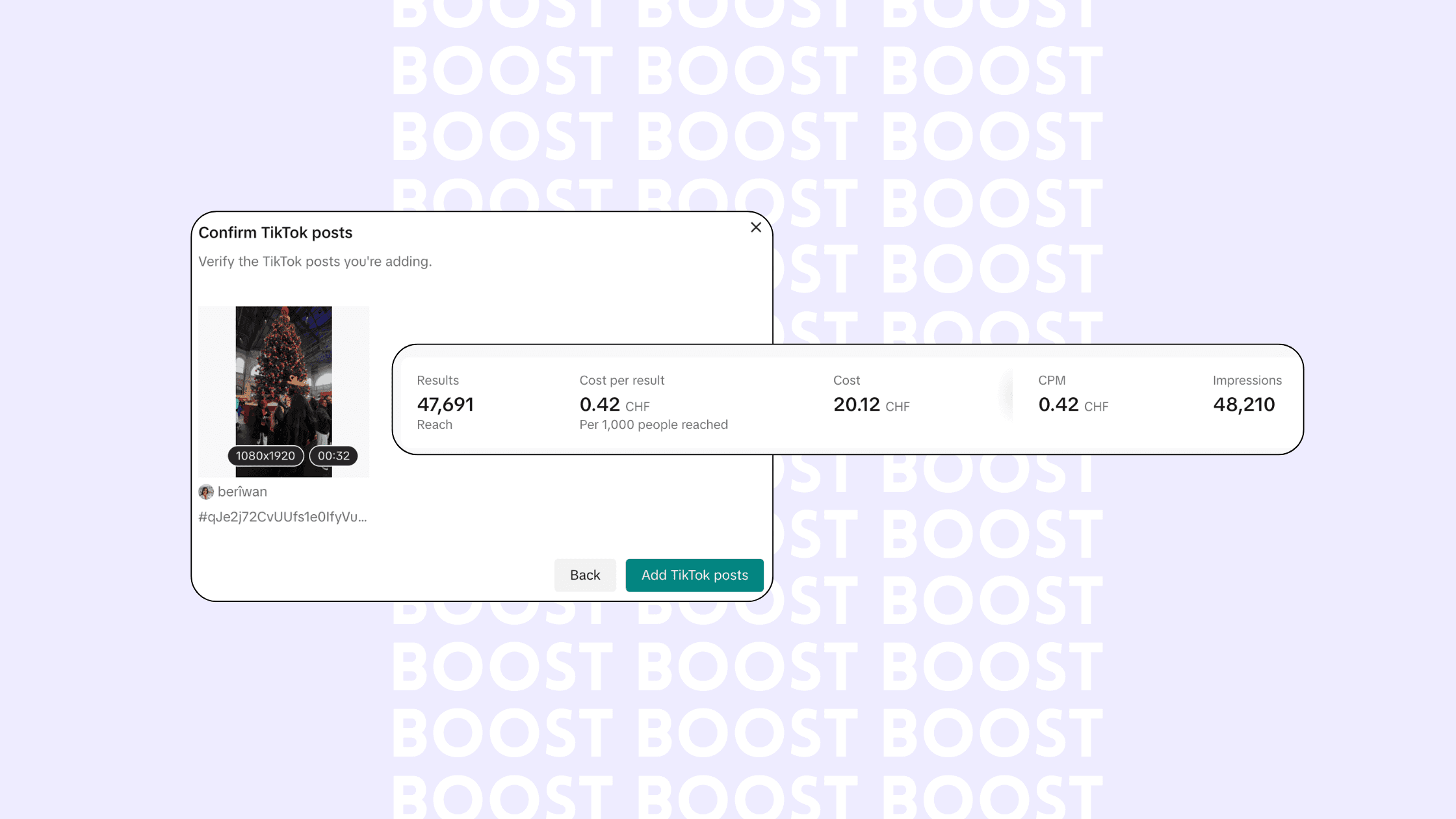
TikTok Spark Ads work best when content, creators, and media are tightly connected. Many brands are already running TikTok Spark Ads, but they tend to run the format like a standard in-feed ad. The result: average performance, even though the format could actually deliver much more.
That’s where this guide comes in. Instead of explaining the basics, it shows you 10 proven strategies that teams use to optimize their TikTok Spark Ads. Each strategy is designed to fit directly into existing workflows – without rebuilding your entire workflow from scratch.
If you want to use TikTok Spark Ads not just as a “side project” but as a scalable performance format, here are the levers that brands and agencies are actually pulling in practice.
1. Select Creators Whose Content Works Organically for TikTok Spark Ads
The strongest success factor for TikTok Spark Ads is not the media setup, but something much earlier: the creator. Spark Ads only scale content that works without a budget, and if a video doesn’t work organically, paid spend won’t magically fix it.
How to recognize creators who are suitable for Spark Ads
Clear, natural style: Creators who tell stories natively without seeming promotional.
Strong first few seconds: Good creators intuitively know how to grab attention.
Consistent organic signals: High watch time, comments, shares – not just views.
Format fit: The content style must match the brand, otherwise the message falls apart once you scale it.
Therefore, choose creators who already work organically. Their style and community will later drive the performance of your Spark Ads. A strong creator will save you iterations down the line. A weak one will make you work against the algorithm from the start.
2. Align Content with TikTok Spark Ads in the Briefing
Creators need to know that their content will later run as a Spark Ad.
A good Spark Ads briefing doesn't control creativity, but rather sets the framework so that the content remains native while still performing well. The creator needs clarity about the goal, benefits, product focus, and potential variations—without turning the video into a scripted ad.
For this to succeed, the briefing should accomplish three things:
Create Context
Creators need to understand what problem the content solves and why the post may be amplified with paid later. Those who understand the context produce more natural and targeted content.
Ensure Authenticity
The core rule remains: “Don't make ads, make TikToks.” The creator decides on the tone, style, and structure. Brands control the goal, not the narrative form.
Clarify Technical Requirements Early
Spark Ads are more flexible than standard in-feed ads, but creators still need clear guidelines early on regarding format, video length, hook, and music usage. Particularly important: music must be cleared for commercial use (or you risk losing Spark eligibility).
A clear briefing is not a creative intervention, but a measure of efficiency. The clearer the technical framework is defined from the outset, the fewer iterations and blockers will arise later in the campaign setup.
This is exactly why a structured process is worthwhile: instead of emails, PDFs, or agency coordination, a compact, consistent briefing works best. Tools like Refluenced remove this friction by generating a consistent, Spark-ready briefing in seconds.
3. Optimize Hooks Without Losing the Creator's Voice
In TikTok Spark Ads, the first few seconds determine whether a video has a chance at all. If the hook doesn't work, it doesn't matter how good the product, creator, or message is—the video will get lost in the feed. At the same time, the hook shouldn't feel artificial, otherwise the content loses exactly what makes Spark Ads so powerful: the authentic creator's voice.
A good hook provides orientation without disrupting the creator's natural narrative style. It sets a clear entry point that is relevant but doesn't sound like an advertising slogan.
In practice, three levers work particularly well:
The creator must set the first few seconds themselves: Hooks that come from the creator – not from the script – seem more natural, generate more retention, and fit the style of the account. Brands can set the direction, but not the wording.
Visual cues are often stronger than words: A quick scene change, a close-up, an unusual opening – these visual hooks often stop the scroll more effectively than text statements. The key is that the creator can integrate them into their style without compromising themselves.
Test variants instead of waiting for the “perfect hook”: The reality in Spark Ads: No team knows in advance which hook will work best. Two to three versions are often enough to identify clear patterns, and these insights are later incorporated directly into new posts or Spark Ad variants.
The optimal hook therefore does not focus on the product, but on the question: Why should someone who doesn't know me keep watching at this moment? If the creator can answer that, authenticity is maintained and Spark Ads have a real shot at scaling with paid behind them.
4. Prepare Variants to Scale TikTok Spark Ads Cost-Effectively
TikTok Spark Ads work best with variants. Teams rarely lose because of their budget—they lose because they run out of creatives early on. Variants, on the other hand, ensure that the algorithm can learn and that Spark Ads remain efficient even as spending increases.
Instead of producing a whole new video, small changes are often enough, such as a different hook, a changed order, an alternative perspective, or a different CTA. In addition, it's worth boosting different creator assets in parallel as Spark Ads. This gives you A/B-style testing without constantly duplicating ad sets or rebuilding creatives.
These differences quickly reveal which version is effective and which is not.
Timing is crucial: variants must be ready before before you scale spend so that tests can run early and the budget does not flow into creative dead ends. The goal is not mass, but clarity. Which version works – and why?
5. Manage Ad Authorization for TikTok Spark Ads Properly
Many Spark Ads fail not because of the creative, but because of missing or expired ad authorizations. Without valid approval, the post cannot be promoted and the entire workflow comes to a standstill.
Why This is Critical
No authorization → no Spark Ad.
Expired codes → campaign stops.
No central tracking → chaos across multiple creators.
To avoid unwanted failures, it must be clarified early on who obtains the authorization, how long it is valid, and where codes are documented.
As soon as the creator uploads the final post → secure authorization immediately. This way, there will be no need for rework or delays in the media setup.
Proper ad authorization is not a formality—it is the technical foundation on which every Spark Ad can run.
6. Use Social Proof as an Amplifier in Spark Ads Setup
TikTok Spark Ads not only take over the content, but also its social signals, and that is exactly what changes how delivery works. Instead of placing an isolated ad, you amplify a post that has already generated clear behavior in the feed. TikTok evaluates these signals before paid media even comes into play.
Relevant Signals for Spark Ads
Depth over volume: Comments, shares, and watch time matter more than raw views.
Credible context: The creator profile remains visible, and with it the social classification of the content.
Continuous momentum: Every additional interaction has an effect on the post and can stabilize its playback.
Rather than treating all content equally, brands should consider: Which posts are already generating behavior that Spark Ads can reinforce?
Social proof is therefore not an additional advantage, but the core mechanism that distinguishes TikTok Spark Ads from classic in-feed ads. By consciously selecting posts that already have organic reach, you ensure that paid media does not work against missing signals, but can scale existing dynamics.
7. Use TikTok Spark Ads in a Differentiated Way Along the Funnel
Spark Ads aren’t one-size-fits-all. Users enter the journey at different points – and a creative only works if it fits the situation at hand. To effectively promote your brand, it is essential to clearly define the role of each Spark Ad phase.
Top Funnel → Generate Attention, Don't Sell
Here, the story is what matters, not the product. Users have no context – so the content must create it. TikTok Spark Ads work best in this phase when they appear native and build a situation, observation, or tension that can be carried forward.
Mid Funnel → Provide Orientation and Build Trust
Users now know what it's about, but not why this particular product is relevant. Spark Ads do one thing above all else here: reduce hesitation.
Creators show typical problems, applications, or experiences—not as a selling point, but as social confirmation that the product works in everyday life.
Bottom Funnel → Facilitate Decision-Making
At this point, there is no longer a need for a big story, but rather a clear argument. TikTok Spark Ads take advantage of the organic format here: a real face, a real explanation, a clear benefit. Social signals also help to reduce uncertainty.
Spark Ads reach their full potential when each phase pursues a different creative goal. Not every post is suitable for every phase – but every phase benefits from TikTok Spark Ads as soon as the creative type is chosen precisely.
8. Align Landing Pages with Spark Ads Content
TikTok Spark Ads create a clear expectation: personal tone, quick orientation, vertical flow. If the landing page does not continue this logic, you create a jarring disconnect—and you’ll pay for it in conversions. Strong Spark Ad performance therefore requires a landing page that seamlessly continues the creative impulse.
What Matters
Message match: The central message of the ad must be directly reflected on the landing page – in tone, imagery, and value proposition. The user should understand without friction: “I'm in the right place.”
Structural continuity: TikTok works through clear anchor points and quick readability. Landing pages that adapt this structure—clear headlines, short sections, visual orientation—keep the user in the flow longer.
Speed: Spark Ads traffic is impulse-driven. Slow pages destroy momentum. For this reason, loading time must be minimal, otherwise the user will not even see the first piece of content.
It's not about making the landing page more “TikTok-like,” but rather about continuing the transition from the ad in a way that feels seamless. The more consistent this connection is, the more stable the traffic will be and the better Spark Ads will convert.
9. Scale Your Budget Progressively – Instead of “Cranking Up” Spend Overnight
TikTok reacts sensitively to budget changes. If spending increases too quickly, the algorithm loses its previous signals and has to relearn. This is a common reason for performance slumps. Scaling is therefore primarily a question of stability, not a question of budget.
Practical Approach
Stabilize first, then scale: Increase the budget when the key metrics are constant.
Work in steps: Small increases lead to cleaner learning phases.
Ensure signal quality: Prepare new creatives in parallel so delivery doesn’t fatigue.
The essence: TikTok does not scale via high budgets, but via strong, consistent signals. Those who allow the budget to grow organically keep these signals stable and avoid the typical regressions that occur with rapid increases.
10. Systematically Use Creative Insights from Spark Ads
TikTok Spark Ads provide clear signals about what kind of content works: Which hooks hold attention? Which perspectives generate response? Which creator styles remain stable under paid? These patterns are more valuable than individual KPIs because they show why a creative works.
The key is to systematize the learning: don’t just track performance—tag and compare creative elements. Recurring patterns, such as certain openings, scene lengths, or tonalities, can form the basis for the next variants. This creates a sustainable learning cycle that improves content and paid media at the same time.
Spark Ads thus deliver a double result: they perform in the present and they show what the next content should look like.
Frequently Asked Questions (FAQs) about TikTok Spark Ads
How Can I Identify Creators Whose Content Holds up Under TikTok Spark Ads?
By clear signals: natural style, strong first few seconds, genuine organic reactions, and a content format that fits the brand. These factors are more reliable than pure reach figures.
What Does Analyzing Spark Ad Performance Offer Beyond Classic KPIs?
TikTok Spark Ads not only show how well something works, but also why. Recurring patterns in the hook, structure, or creator style provide creative insights that improve the production process step by step.
How Does Refluenced Support TikTok Spark Ads?
Refluenced structures the entire process: automated briefing, creator applications, content handover, and variant preparation. This creates a workflow that enables Spark Ads-ready content without manual coordination.
Conclusion: Spark Ads Only Work When Content, Creators, and Processes Work Together
TikTok Spark Ads are not a single lever, but a system: they work consistently when the creator's voice, content logic, and media setup mesh cleanly. The organic origin of the video, a clear briefing, variant testing, social signals, and controlled scaling all contribute to the same goal—amplifying content that already generates real behavior in the feed.
Brands that consistently map this workflow benefit twice: their TikTok Spark Ads remain more stable in performance, and each campaign delivers insights that make future creatives more precise.
If you want to set up this exact process in a structured way—from creator selection to ad-ready content—you can do it in minutes with Refluenced. Create your first campaign and see how clean Spark Ads content can be when the workflow is right.
TikTok Spark Ads work best when content, creators, and media are tightly connected. Many brands are already running TikTok Spark Ads, but they tend to run the format like a standard in-feed ad. The result: average performance, even though the format could actually deliver much more.
That’s where this guide comes in. Instead of explaining the basics, it shows you 10 proven strategies that teams use to optimize their TikTok Spark Ads. Each strategy is designed to fit directly into existing workflows – without rebuilding your entire workflow from scratch.
If you want to use TikTok Spark Ads not just as a “side project” but as a scalable performance format, here are the levers that brands and agencies are actually pulling in practice.
1. Select Creators Whose Content Works Organically for TikTok Spark Ads
The strongest success factor for TikTok Spark Ads is not the media setup, but something much earlier: the creator. Spark Ads only scale content that works without a budget, and if a video doesn’t work organically, paid spend won’t magically fix it.
How to recognize creators who are suitable for Spark Ads
Clear, natural style: Creators who tell stories natively without seeming promotional.
Strong first few seconds: Good creators intuitively know how to grab attention.
Consistent organic signals: High watch time, comments, shares – not just views.
Format fit: The content style must match the brand, otherwise the message falls apart once you scale it.
Therefore, choose creators who already work organically. Their style and community will later drive the performance of your Spark Ads. A strong creator will save you iterations down the line. A weak one will make you work against the algorithm from the start.
2. Align Content with TikTok Spark Ads in the Briefing
Creators need to know that their content will later run as a Spark Ad.
A good Spark Ads briefing doesn't control creativity, but rather sets the framework so that the content remains native while still performing well. The creator needs clarity about the goal, benefits, product focus, and potential variations—without turning the video into a scripted ad.
For this to succeed, the briefing should accomplish three things:
Create Context
Creators need to understand what problem the content solves and why the post may be amplified with paid later. Those who understand the context produce more natural and targeted content.
Ensure Authenticity
The core rule remains: “Don't make ads, make TikToks.” The creator decides on the tone, style, and structure. Brands control the goal, not the narrative form.
Clarify Technical Requirements Early
Spark Ads are more flexible than standard in-feed ads, but creators still need clear guidelines early on regarding format, video length, hook, and music usage. Particularly important: music must be cleared for commercial use (or you risk losing Spark eligibility).
A clear briefing is not a creative intervention, but a measure of efficiency. The clearer the technical framework is defined from the outset, the fewer iterations and blockers will arise later in the campaign setup.
This is exactly why a structured process is worthwhile: instead of emails, PDFs, or agency coordination, a compact, consistent briefing works best. Tools like Refluenced remove this friction by generating a consistent, Spark-ready briefing in seconds.
3. Optimize Hooks Without Losing the Creator's Voice
In TikTok Spark Ads, the first few seconds determine whether a video has a chance at all. If the hook doesn't work, it doesn't matter how good the product, creator, or message is—the video will get lost in the feed. At the same time, the hook shouldn't feel artificial, otherwise the content loses exactly what makes Spark Ads so powerful: the authentic creator's voice.
A good hook provides orientation without disrupting the creator's natural narrative style. It sets a clear entry point that is relevant but doesn't sound like an advertising slogan.
In practice, three levers work particularly well:
The creator must set the first few seconds themselves: Hooks that come from the creator – not from the script – seem more natural, generate more retention, and fit the style of the account. Brands can set the direction, but not the wording.
Visual cues are often stronger than words: A quick scene change, a close-up, an unusual opening – these visual hooks often stop the scroll more effectively than text statements. The key is that the creator can integrate them into their style without compromising themselves.
Test variants instead of waiting for the “perfect hook”: The reality in Spark Ads: No team knows in advance which hook will work best. Two to three versions are often enough to identify clear patterns, and these insights are later incorporated directly into new posts or Spark Ad variants.
The optimal hook therefore does not focus on the product, but on the question: Why should someone who doesn't know me keep watching at this moment? If the creator can answer that, authenticity is maintained and Spark Ads have a real shot at scaling with paid behind them.
4. Prepare Variants to Scale TikTok Spark Ads Cost-Effectively
TikTok Spark Ads work best with variants. Teams rarely lose because of their budget—they lose because they run out of creatives early on. Variants, on the other hand, ensure that the algorithm can learn and that Spark Ads remain efficient even as spending increases.
Instead of producing a whole new video, small changes are often enough, such as a different hook, a changed order, an alternative perspective, or a different CTA. In addition, it's worth boosting different creator assets in parallel as Spark Ads. This gives you A/B-style testing without constantly duplicating ad sets or rebuilding creatives.
These differences quickly reveal which version is effective and which is not.
Timing is crucial: variants must be ready before before you scale spend so that tests can run early and the budget does not flow into creative dead ends. The goal is not mass, but clarity. Which version works – and why?
5. Manage Ad Authorization for TikTok Spark Ads Properly
Many Spark Ads fail not because of the creative, but because of missing or expired ad authorizations. Without valid approval, the post cannot be promoted and the entire workflow comes to a standstill.
Why This is Critical
No authorization → no Spark Ad.
Expired codes → campaign stops.
No central tracking → chaos across multiple creators.
To avoid unwanted failures, it must be clarified early on who obtains the authorization, how long it is valid, and where codes are documented.
As soon as the creator uploads the final post → secure authorization immediately. This way, there will be no need for rework or delays in the media setup.
Proper ad authorization is not a formality—it is the technical foundation on which every Spark Ad can run.
6. Use Social Proof as an Amplifier in Spark Ads Setup
TikTok Spark Ads not only take over the content, but also its social signals, and that is exactly what changes how delivery works. Instead of placing an isolated ad, you amplify a post that has already generated clear behavior in the feed. TikTok evaluates these signals before paid media even comes into play.
Relevant Signals for Spark Ads
Depth over volume: Comments, shares, and watch time matter more than raw views.
Credible context: The creator profile remains visible, and with it the social classification of the content.
Continuous momentum: Every additional interaction has an effect on the post and can stabilize its playback.
Rather than treating all content equally, brands should consider: Which posts are already generating behavior that Spark Ads can reinforce?
Social proof is therefore not an additional advantage, but the core mechanism that distinguishes TikTok Spark Ads from classic in-feed ads. By consciously selecting posts that already have organic reach, you ensure that paid media does not work against missing signals, but can scale existing dynamics.
7. Use TikTok Spark Ads in a Differentiated Way Along the Funnel
Spark Ads aren’t one-size-fits-all. Users enter the journey at different points – and a creative only works if it fits the situation at hand. To effectively promote your brand, it is essential to clearly define the role of each Spark Ad phase.
Top Funnel → Generate Attention, Don't Sell
Here, the story is what matters, not the product. Users have no context – so the content must create it. TikTok Spark Ads work best in this phase when they appear native and build a situation, observation, or tension that can be carried forward.
Mid Funnel → Provide Orientation and Build Trust
Users now know what it's about, but not why this particular product is relevant. Spark Ads do one thing above all else here: reduce hesitation.
Creators show typical problems, applications, or experiences—not as a selling point, but as social confirmation that the product works in everyday life.
Bottom Funnel → Facilitate Decision-Making
At this point, there is no longer a need for a big story, but rather a clear argument. TikTok Spark Ads take advantage of the organic format here: a real face, a real explanation, a clear benefit. Social signals also help to reduce uncertainty.
Spark Ads reach their full potential when each phase pursues a different creative goal. Not every post is suitable for every phase – but every phase benefits from TikTok Spark Ads as soon as the creative type is chosen precisely.
8. Align Landing Pages with Spark Ads Content
TikTok Spark Ads create a clear expectation: personal tone, quick orientation, vertical flow. If the landing page does not continue this logic, you create a jarring disconnect—and you’ll pay for it in conversions. Strong Spark Ad performance therefore requires a landing page that seamlessly continues the creative impulse.
What Matters
Message match: The central message of the ad must be directly reflected on the landing page – in tone, imagery, and value proposition. The user should understand without friction: “I'm in the right place.”
Structural continuity: TikTok works through clear anchor points and quick readability. Landing pages that adapt this structure—clear headlines, short sections, visual orientation—keep the user in the flow longer.
Speed: Spark Ads traffic is impulse-driven. Slow pages destroy momentum. For this reason, loading time must be minimal, otherwise the user will not even see the first piece of content.
It's not about making the landing page more “TikTok-like,” but rather about continuing the transition from the ad in a way that feels seamless. The more consistent this connection is, the more stable the traffic will be and the better Spark Ads will convert.
9. Scale Your Budget Progressively – Instead of “Cranking Up” Spend Overnight
TikTok reacts sensitively to budget changes. If spending increases too quickly, the algorithm loses its previous signals and has to relearn. This is a common reason for performance slumps. Scaling is therefore primarily a question of stability, not a question of budget.
Practical Approach
Stabilize first, then scale: Increase the budget when the key metrics are constant.
Work in steps: Small increases lead to cleaner learning phases.
Ensure signal quality: Prepare new creatives in parallel so delivery doesn’t fatigue.
The essence: TikTok does not scale via high budgets, but via strong, consistent signals. Those who allow the budget to grow organically keep these signals stable and avoid the typical regressions that occur with rapid increases.
10. Systematically Use Creative Insights from Spark Ads
TikTok Spark Ads provide clear signals about what kind of content works: Which hooks hold attention? Which perspectives generate response? Which creator styles remain stable under paid? These patterns are more valuable than individual KPIs because they show why a creative works.
The key is to systematize the learning: don’t just track performance—tag and compare creative elements. Recurring patterns, such as certain openings, scene lengths, or tonalities, can form the basis for the next variants. This creates a sustainable learning cycle that improves content and paid media at the same time.
Spark Ads thus deliver a double result: they perform in the present and they show what the next content should look like.
Frequently Asked Questions (FAQs) about TikTok Spark Ads
How Can I Identify Creators Whose Content Holds up Under TikTok Spark Ads?
By clear signals: natural style, strong first few seconds, genuine organic reactions, and a content format that fits the brand. These factors are more reliable than pure reach figures.
What Does Analyzing Spark Ad Performance Offer Beyond Classic KPIs?
TikTok Spark Ads not only show how well something works, but also why. Recurring patterns in the hook, structure, or creator style provide creative insights that improve the production process step by step.
How Does Refluenced Support TikTok Spark Ads?
Refluenced structures the entire process: automated briefing, creator applications, content handover, and variant preparation. This creates a workflow that enables Spark Ads-ready content without manual coordination.
Conclusion: Spark Ads Only Work When Content, Creators, and Processes Work Together
TikTok Spark Ads are not a single lever, but a system: they work consistently when the creator's voice, content logic, and media setup mesh cleanly. The organic origin of the video, a clear briefing, variant testing, social signals, and controlled scaling all contribute to the same goal—amplifying content that already generates real behavior in the feed.
Brands that consistently map this workflow benefit twice: their TikTok Spark Ads remain more stable in performance, and each campaign delivers insights that make future creatives more precise.
If you want to set up this exact process in a structured way—from creator selection to ad-ready content—you can do it in minutes with Refluenced. Create your first campaign and see how clean Spark Ads content can be when the workflow is right.
TikTok Spark Ads work best when content, creators, and media are tightly connected. Many brands are already running TikTok Spark Ads, but they tend to run the format like a standard in-feed ad. The result: average performance, even though the format could actually deliver much more.
That’s where this guide comes in. Instead of explaining the basics, it shows you 10 proven strategies that teams use to optimize their TikTok Spark Ads. Each strategy is designed to fit directly into existing workflows – without rebuilding your entire workflow from scratch.
If you want to use TikTok Spark Ads not just as a “side project” but as a scalable performance format, here are the levers that brands and agencies are actually pulling in practice.
1. Select Creators Whose Content Works Organically for TikTok Spark Ads
The strongest success factor for TikTok Spark Ads is not the media setup, but something much earlier: the creator. Spark Ads only scale content that works without a budget, and if a video doesn’t work organically, paid spend won’t magically fix it.
How to recognize creators who are suitable for Spark Ads
Clear, natural style: Creators who tell stories natively without seeming promotional.
Strong first few seconds: Good creators intuitively know how to grab attention.
Consistent organic signals: High watch time, comments, shares – not just views.
Format fit: The content style must match the brand, otherwise the message falls apart once you scale it.
Therefore, choose creators who already work organically. Their style and community will later drive the performance of your Spark Ads. A strong creator will save you iterations down the line. A weak one will make you work against the algorithm from the start.
2. Align Content with TikTok Spark Ads in the Briefing
Creators need to know that their content will later run as a Spark Ad.
A good Spark Ads briefing doesn't control creativity, but rather sets the framework so that the content remains native while still performing well. The creator needs clarity about the goal, benefits, product focus, and potential variations—without turning the video into a scripted ad.
For this to succeed, the briefing should accomplish three things:
Create Context
Creators need to understand what problem the content solves and why the post may be amplified with paid later. Those who understand the context produce more natural and targeted content.
Ensure Authenticity
The core rule remains: “Don't make ads, make TikToks.” The creator decides on the tone, style, and structure. Brands control the goal, not the narrative form.
Clarify Technical Requirements Early
Spark Ads are more flexible than standard in-feed ads, but creators still need clear guidelines early on regarding format, video length, hook, and music usage. Particularly important: music must be cleared for commercial use (or you risk losing Spark eligibility).
A clear briefing is not a creative intervention, but a measure of efficiency. The clearer the technical framework is defined from the outset, the fewer iterations and blockers will arise later in the campaign setup.
This is exactly why a structured process is worthwhile: instead of emails, PDFs, or agency coordination, a compact, consistent briefing works best. Tools like Refluenced remove this friction by generating a consistent, Spark-ready briefing in seconds.
3. Optimize Hooks Without Losing the Creator's Voice
In TikTok Spark Ads, the first few seconds determine whether a video has a chance at all. If the hook doesn't work, it doesn't matter how good the product, creator, or message is—the video will get lost in the feed. At the same time, the hook shouldn't feel artificial, otherwise the content loses exactly what makes Spark Ads so powerful: the authentic creator's voice.
A good hook provides orientation without disrupting the creator's natural narrative style. It sets a clear entry point that is relevant but doesn't sound like an advertising slogan.
In practice, three levers work particularly well:
The creator must set the first few seconds themselves: Hooks that come from the creator – not from the script – seem more natural, generate more retention, and fit the style of the account. Brands can set the direction, but not the wording.
Visual cues are often stronger than words: A quick scene change, a close-up, an unusual opening – these visual hooks often stop the scroll more effectively than text statements. The key is that the creator can integrate them into their style without compromising themselves.
Test variants instead of waiting for the “perfect hook”: The reality in Spark Ads: No team knows in advance which hook will work best. Two to three versions are often enough to identify clear patterns, and these insights are later incorporated directly into new posts or Spark Ad variants.
The optimal hook therefore does not focus on the product, but on the question: Why should someone who doesn't know me keep watching at this moment? If the creator can answer that, authenticity is maintained and Spark Ads have a real shot at scaling with paid behind them.
4. Prepare Variants to Scale TikTok Spark Ads Cost-Effectively
TikTok Spark Ads work best with variants. Teams rarely lose because of their budget—they lose because they run out of creatives early on. Variants, on the other hand, ensure that the algorithm can learn and that Spark Ads remain efficient even as spending increases.
Instead of producing a whole new video, small changes are often enough, such as a different hook, a changed order, an alternative perspective, or a different CTA. In addition, it's worth boosting different creator assets in parallel as Spark Ads. This gives you A/B-style testing without constantly duplicating ad sets or rebuilding creatives.
These differences quickly reveal which version is effective and which is not.
Timing is crucial: variants must be ready before before you scale spend so that tests can run early and the budget does not flow into creative dead ends. The goal is not mass, but clarity. Which version works – and why?
5. Manage Ad Authorization for TikTok Spark Ads Properly
Many Spark Ads fail not because of the creative, but because of missing or expired ad authorizations. Without valid approval, the post cannot be promoted and the entire workflow comes to a standstill.
Why This is Critical
No authorization → no Spark Ad.
Expired codes → campaign stops.
No central tracking → chaos across multiple creators.
To avoid unwanted failures, it must be clarified early on who obtains the authorization, how long it is valid, and where codes are documented.
As soon as the creator uploads the final post → secure authorization immediately. This way, there will be no need for rework or delays in the media setup.
Proper ad authorization is not a formality—it is the technical foundation on which every Spark Ad can run.
6. Use Social Proof as an Amplifier in Spark Ads Setup
TikTok Spark Ads not only take over the content, but also its social signals, and that is exactly what changes how delivery works. Instead of placing an isolated ad, you amplify a post that has already generated clear behavior in the feed. TikTok evaluates these signals before paid media even comes into play.
Relevant Signals for Spark Ads
Depth over volume: Comments, shares, and watch time matter more than raw views.
Credible context: The creator profile remains visible, and with it the social classification of the content.
Continuous momentum: Every additional interaction has an effect on the post and can stabilize its playback.
Rather than treating all content equally, brands should consider: Which posts are already generating behavior that Spark Ads can reinforce?
Social proof is therefore not an additional advantage, but the core mechanism that distinguishes TikTok Spark Ads from classic in-feed ads. By consciously selecting posts that already have organic reach, you ensure that paid media does not work against missing signals, but can scale existing dynamics.
7. Use TikTok Spark Ads in a Differentiated Way Along the Funnel
Spark Ads aren’t one-size-fits-all. Users enter the journey at different points – and a creative only works if it fits the situation at hand. To effectively promote your brand, it is essential to clearly define the role of each Spark Ad phase.
Top Funnel → Generate Attention, Don't Sell
Here, the story is what matters, not the product. Users have no context – so the content must create it. TikTok Spark Ads work best in this phase when they appear native and build a situation, observation, or tension that can be carried forward.
Mid Funnel → Provide Orientation and Build Trust
Users now know what it's about, but not why this particular product is relevant. Spark Ads do one thing above all else here: reduce hesitation.
Creators show typical problems, applications, or experiences—not as a selling point, but as social confirmation that the product works in everyday life.
Bottom Funnel → Facilitate Decision-Making
At this point, there is no longer a need for a big story, but rather a clear argument. TikTok Spark Ads take advantage of the organic format here: a real face, a real explanation, a clear benefit. Social signals also help to reduce uncertainty.
Spark Ads reach their full potential when each phase pursues a different creative goal. Not every post is suitable for every phase – but every phase benefits from TikTok Spark Ads as soon as the creative type is chosen precisely.
8. Align Landing Pages with Spark Ads Content
TikTok Spark Ads create a clear expectation: personal tone, quick orientation, vertical flow. If the landing page does not continue this logic, you create a jarring disconnect—and you’ll pay for it in conversions. Strong Spark Ad performance therefore requires a landing page that seamlessly continues the creative impulse.
What Matters
Message match: The central message of the ad must be directly reflected on the landing page – in tone, imagery, and value proposition. The user should understand without friction: “I'm in the right place.”
Structural continuity: TikTok works through clear anchor points and quick readability. Landing pages that adapt this structure—clear headlines, short sections, visual orientation—keep the user in the flow longer.
Speed: Spark Ads traffic is impulse-driven. Slow pages destroy momentum. For this reason, loading time must be minimal, otherwise the user will not even see the first piece of content.
It's not about making the landing page more “TikTok-like,” but rather about continuing the transition from the ad in a way that feels seamless. The more consistent this connection is, the more stable the traffic will be and the better Spark Ads will convert.
9. Scale Your Budget Progressively – Instead of “Cranking Up” Spend Overnight
TikTok reacts sensitively to budget changes. If spending increases too quickly, the algorithm loses its previous signals and has to relearn. This is a common reason for performance slumps. Scaling is therefore primarily a question of stability, not a question of budget.
Practical Approach
Stabilize first, then scale: Increase the budget when the key metrics are constant.
Work in steps: Small increases lead to cleaner learning phases.
Ensure signal quality: Prepare new creatives in parallel so delivery doesn’t fatigue.
The essence: TikTok does not scale via high budgets, but via strong, consistent signals. Those who allow the budget to grow organically keep these signals stable and avoid the typical regressions that occur with rapid increases.
10. Systematically Use Creative Insights from Spark Ads
TikTok Spark Ads provide clear signals about what kind of content works: Which hooks hold attention? Which perspectives generate response? Which creator styles remain stable under paid? These patterns are more valuable than individual KPIs because they show why a creative works.
The key is to systematize the learning: don’t just track performance—tag and compare creative elements. Recurring patterns, such as certain openings, scene lengths, or tonalities, can form the basis for the next variants. This creates a sustainable learning cycle that improves content and paid media at the same time.
Spark Ads thus deliver a double result: they perform in the present and they show what the next content should look like.
Frequently Asked Questions (FAQs) about TikTok Spark Ads
How Can I Identify Creators Whose Content Holds up Under TikTok Spark Ads?
By clear signals: natural style, strong first few seconds, genuine organic reactions, and a content format that fits the brand. These factors are more reliable than pure reach figures.
What Does Analyzing Spark Ad Performance Offer Beyond Classic KPIs?
TikTok Spark Ads not only show how well something works, but also why. Recurring patterns in the hook, structure, or creator style provide creative insights that improve the production process step by step.
How Does Refluenced Support TikTok Spark Ads?
Refluenced structures the entire process: automated briefing, creator applications, content handover, and variant preparation. This creates a workflow that enables Spark Ads-ready content without manual coordination.
Conclusion: Spark Ads Only Work When Content, Creators, and Processes Work Together
TikTok Spark Ads are not a single lever, but a system: they work consistently when the creator's voice, content logic, and media setup mesh cleanly. The organic origin of the video, a clear briefing, variant testing, social signals, and controlled scaling all contribute to the same goal—amplifying content that already generates real behavior in the feed.
Brands that consistently map this workflow benefit twice: their TikTok Spark Ads remain more stable in performance, and each campaign delivers insights that make future creatives more precise.
If you want to set up this exact process in a structured way—from creator selection to ad-ready content—you can do it in minutes with Refluenced. Create your first campaign and see how clean Spark Ads content can be when the workflow is right.
Table of Content
Label
Share It On
Share It On
Share It On
